
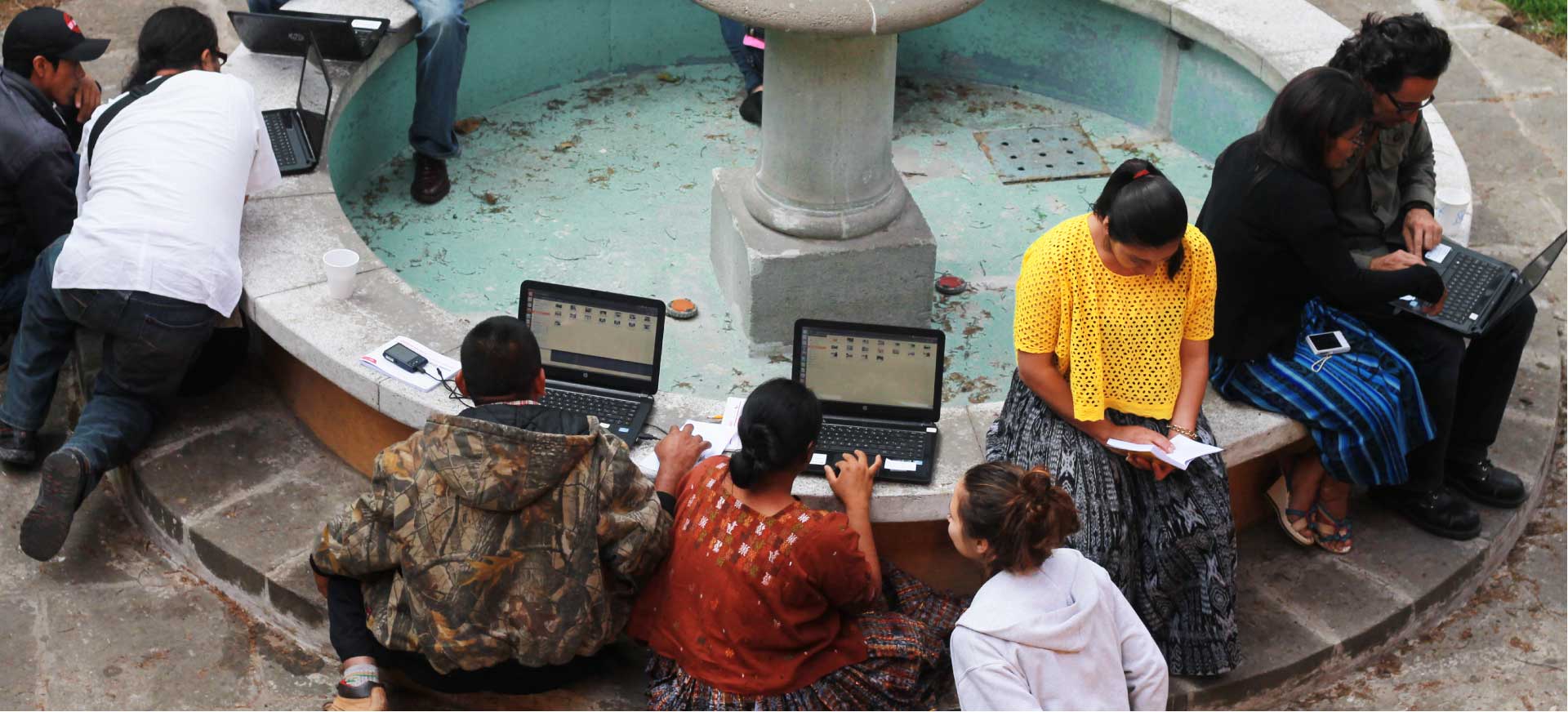

In 2006, a group of young professionals, led by Walter Flores, came together to implement a participatory action research project that sought to implement a participatory system for monitoring health services in rural municipalities. The project was based on the premise that mistrust between the population and public servants is a remnant of the armed conflict experienced in Guatemala during the second half of the 20th century, as well as of the historical relations of discrimination and social exclusion that underlie all social interactions. Based on the Urban and Rural Development Councils Law and the Health Code, our project was intended to promote citizen involvement in public policies and health services as a way to bring different actors together, generate dialogue, accountability and, ultimately, contribute to democratic governance of the health system.
While the project presented significant challenges, it also showed the enormous potential that exists in addressing the problems of access to health services and shortages of essential inputs. Through the collective action of the rural population learning about their rights and obligations under the country's legal framework, it became clear to us that conceptual frameworks needed to be developed and adapted for this work, as well as methodological approaches that would allow this work to continue.
In addition to the need for the academic work described above, the initial group sought to carry out the kind of work that did not separate the academic from the commitment to support the agency of socially excluded populations. In addition, it was clear that the findings and knowledge generated through the research should be communicated and fed into advocacy and advocacy processes.
What was described above went beyond an isolated research project to become the intention and then the action of founding a civil association that would allow the above-described purposes to be put into practice. Thus, in January 2009, CEGSS was founded. It originally included Ismael Gómez, Ana Lorena Ruano, Denise Phé-Funchal, Raphael Zepeda, Carlos Quiñónez and Walter Flores. From its founding to date, the CEGSS team has continued to grow and expand its work horizon, which now includes international collaborations. Likewise, it has remained firm in its original purpose of seeking to make research and knowledge collective processes that should serve to counteract social exclusion and discrimination in our societies.